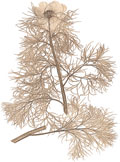
Paeonia tenuifolia, Naturselbstdruck (nature print) by von Ettinghausen & Pokorny, in: Physiotypia plantarum austriacarum, table 410, 1856
|
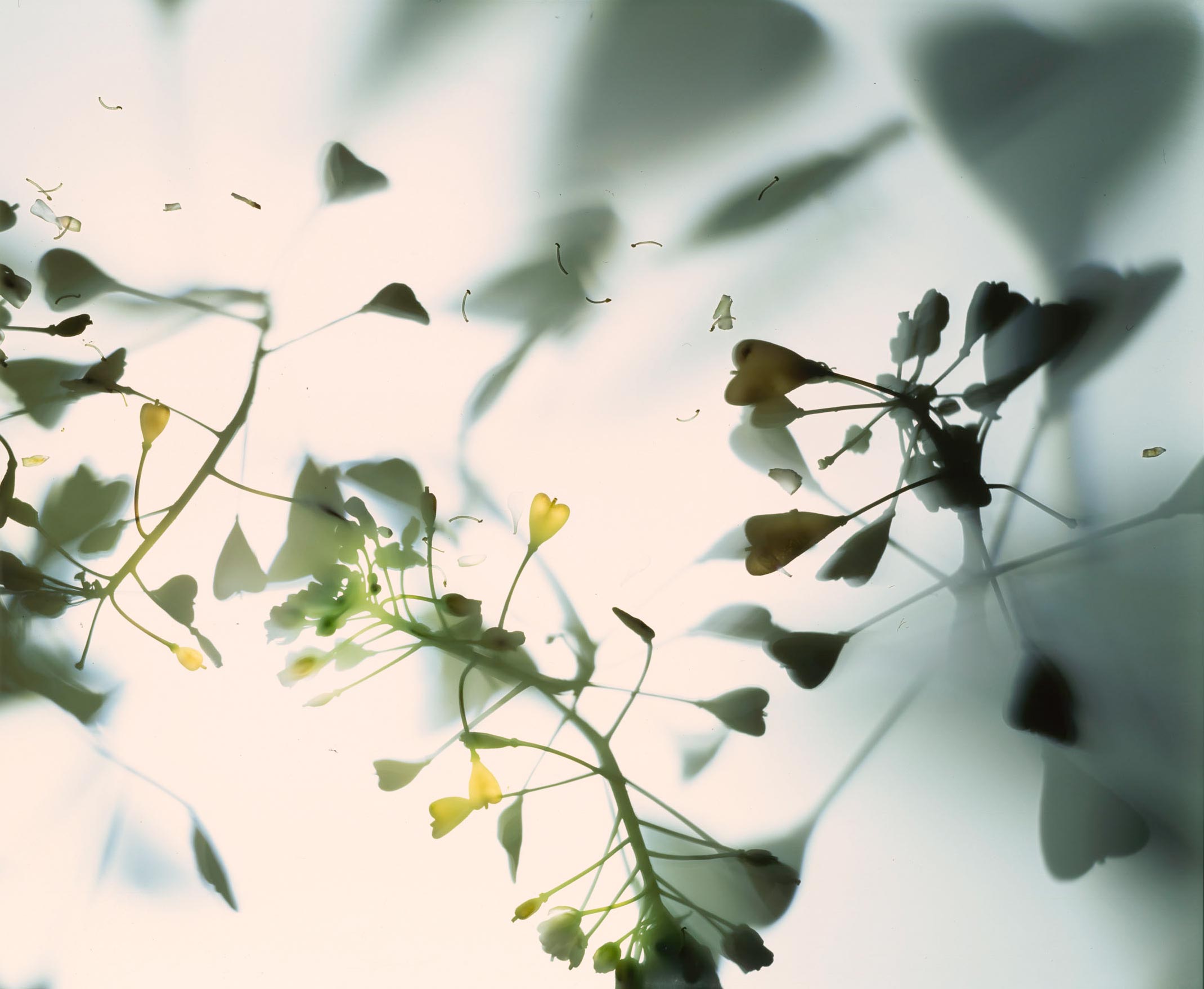
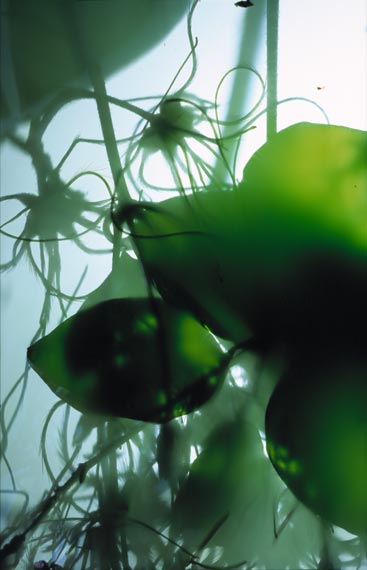
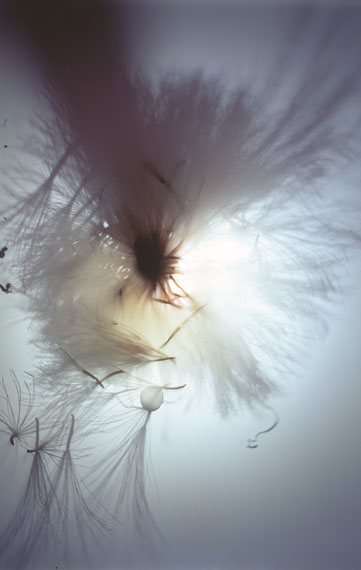
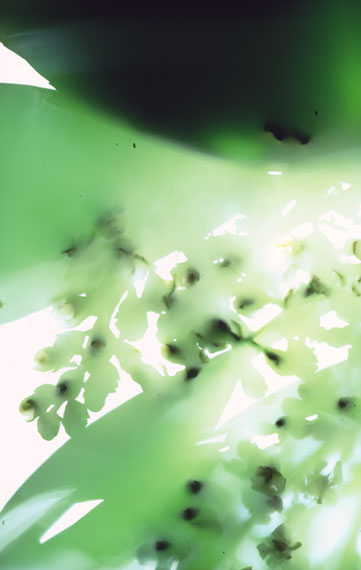
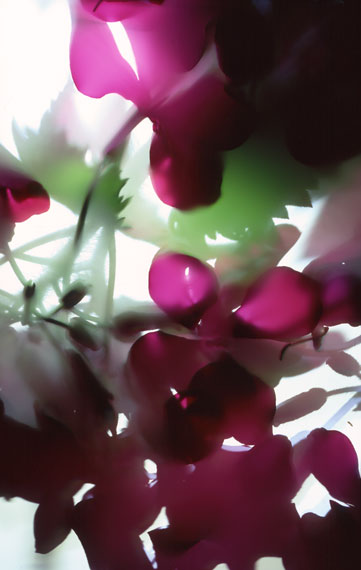
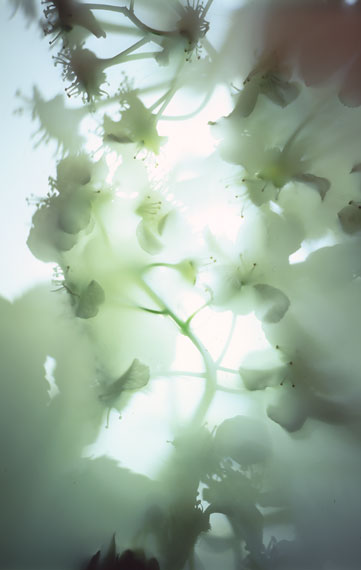
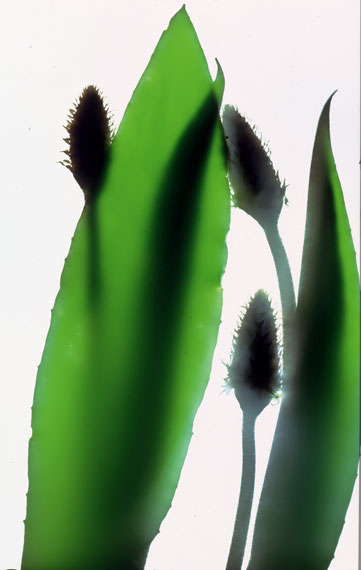
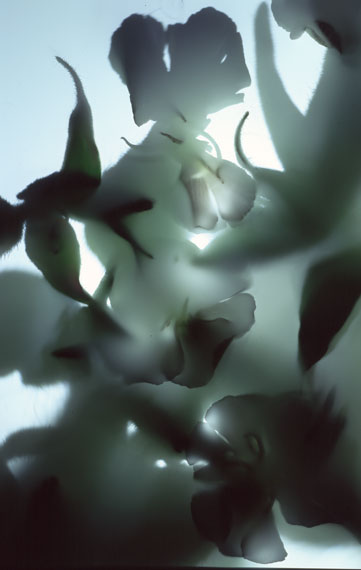
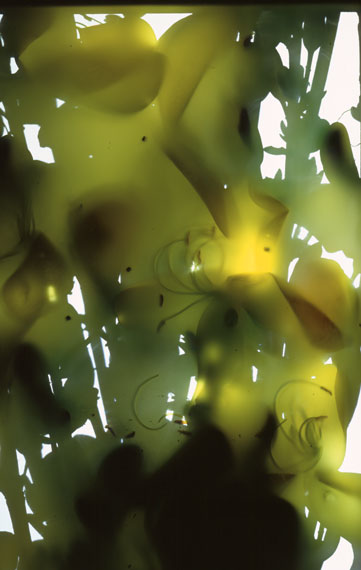
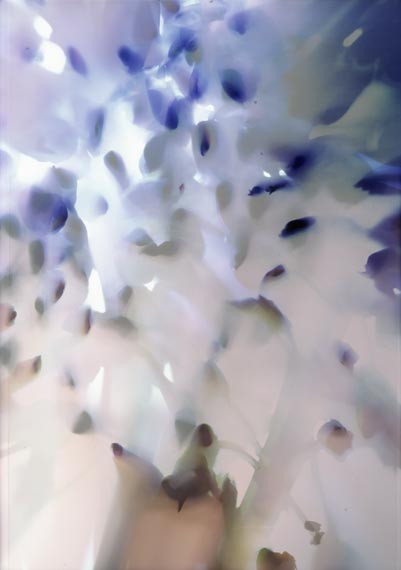
Coita | flora domestica is a proverbially tactful approach to the shadow world of nature. With this systematic, botanically inspired mapping of native flora in the Black Forest or of pioneer plants in Cologne's industrial wastelands, Tim Otto Roth historically ties in with the tradition of nature (self) printing and the cyanotypes of botanist Anna Atkins. In his shadow herbarium of around 200 species, however, Roth not only brings colour into play, but also radicalises the aspect of touch: his works are primarily a tactile endeavour. Since he captures the shadows of the plants on highly sensitive slide film, he has to expose the plants on the film material in complete darkness – a tactile, seemingly obscure composition that he has perfected over the years. What is new about his practice is that he places the light directly on the plants
[...] intangible, composed of light forms that merely simulate the natural ones familiar to the naked eye. Washington Post
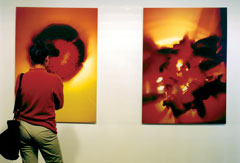
Amanita muscaria & Dianthus, ilfochrome on aludibond, each 150x100 cm, 1999
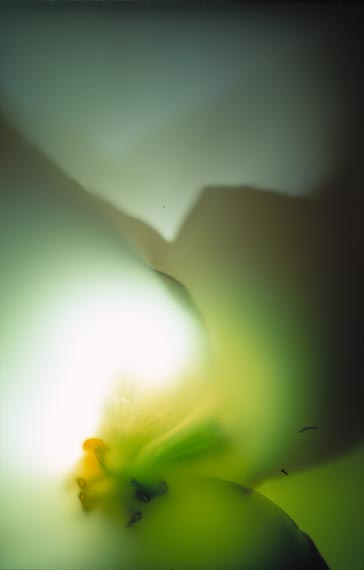
What is new about Roth's practice is that he places the light directly on the plants for many of his motifs. Here, the light no longer acts from a distance, but comes into close contact with the plants, transforming the flora into luminous bodies. Many of these plant shadows thus echo a peculiar amalgam of light, blossom and light-sensitive surface, a convergence and intermingling whose intimate touch is further enhanced by the enlargement. Only at first glance does the title Coita refer to the latent pornographic character of the floral motif. Rather, it emphasises the merging (Latin: coitus), the fusion of the floral reproductive apparatus with light and light-sensitive surfaces. Colour plays a subtle role as an indicator of proximity and distance: the colour fades the further the flower parts move away from the surface of the film material.
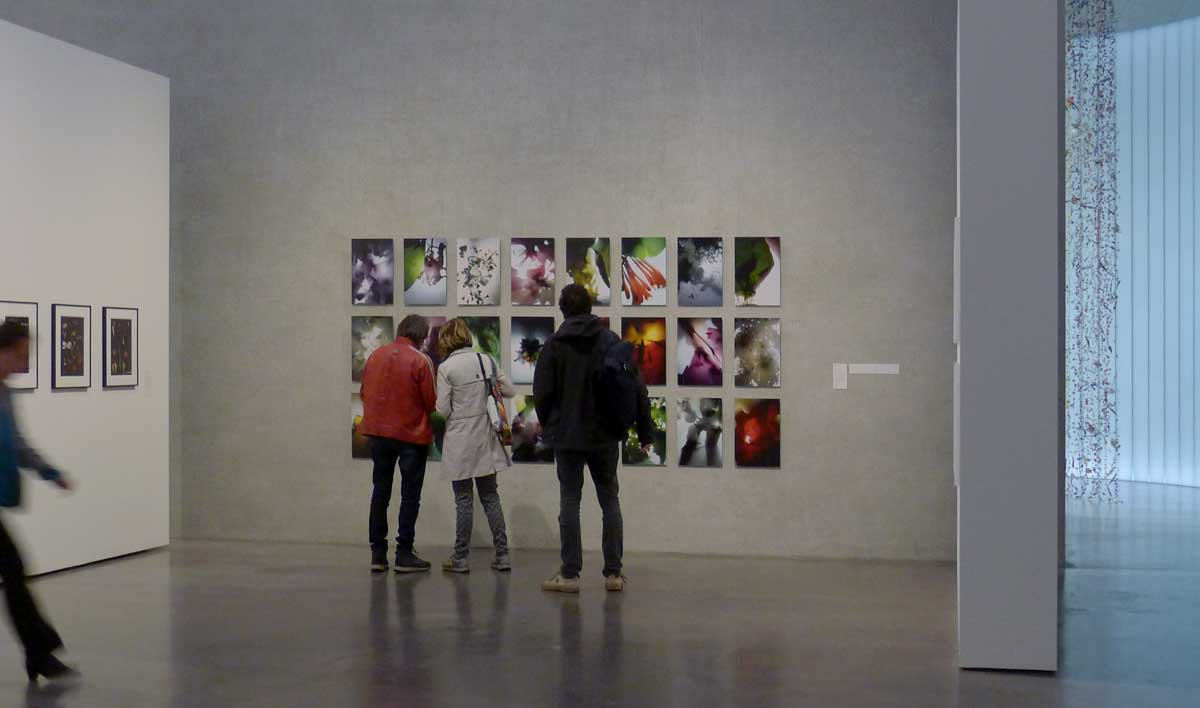
A cluster of 24 floras at the exhibition Aufbelüht und abgelichtet at Galerie Stihl Waiblingen (2019).
|
Coita | flora domestica ist eine sprichwörtlich taktvolle Annäherung an die Schattenwelt der Natur. Bei dieser systematischen, an die Botanik angelegte Kartierung der heimischen Flora im Schwarzwald oder von Pflanzenpionieren in Kölner Industriebrachen knüpft Tim Otto Roth historisch an die Tradition des Natur(selbst)drucks und der Cyanotypien der Botanikerin Anna Atkins an. Bei seinem rund 200 Arten umfassenden Schattenherbarium bringt Roth aber nicht nur Farbe ins Spiel, sondern er radikalisiert den Aspekt der Berührung weiter: Seine Arbeiten sind zuvorderst ertastet. Da er die Schatten der Pflanzen auf hochempfindlichem Diafilm festhält, muss er in völliger Dunkelheit die Pflanzen auf dem Filmmaterial exponieren – ein taktiles vermeintlich obskures Komponieren, das er über die Jahre hinweg immer weiter perfektioniert hat.
[...] nicht greifbar und aus Lichtformen komponiert, die lediglich die natürlichen Formen simulieren, die dem bloßen Auge vertraut sind. Washington Post
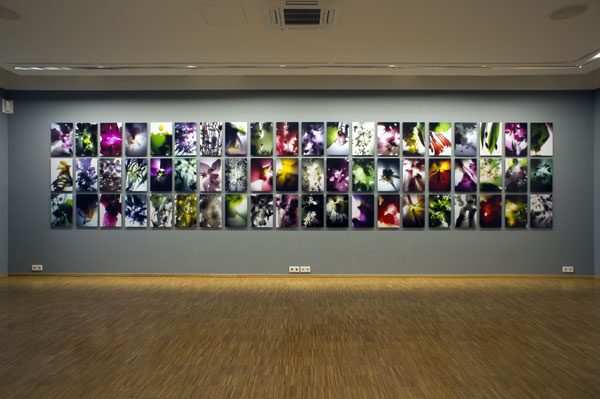
A cluster of 60 pictures of floras at the exhibition XX oder der 'Mummelsee in der Pfanne' at Städtische Galerie Offenburg 2016. Each 33,5x49,8 cm, lambda print on Fuji Chrystal Archive, aludibond, edition 5+1, 2004-2009.
Neu an RothsVorgehen ist dabei, dass er bei vielen Motiven das Licht direkt an die Pflanzen ansetzt. Das Licht agiert nicht mehr aus einem Abstand heraus, sondern geht in Tuchfühlung und verwandelt die Flora zu Leuchtkörpern. In vielen dieser pflanzlichen Schattenbilder hallt somit ein eigenartiges Amalgam aus Licht, Blüte und lichtempfindlicher Oberfläche wieder, ein Zusammentreffen und Ineinandergehen, dessen intime Berührtheit durch die Vergrößerung noch verstärkt wird. Nur auf den ersten Blick verweist der Titel Coita also auf den latent pornographischen Charakter des Blumenmotivs. Vielmehr unterstreicht er das Ineinandergehen (lat. coitus), das Verschmelzen des floralen Fortplanzungsapparats mit Licht und lichtempfindlicher Oberfläche. Farbe kommt dabei eine subtile Rolle zu als Indikator von Nähe und Ferne: Je weiter sich Blütenteile von der Oberfläche des Filmmaterials entfernen, umso mehr schwindet die Farbe.
documentation in print format/ Kurzdokumentation:
 |
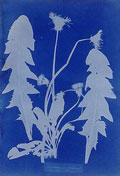
Anna Atkins: Dandelion from 'British and Foreign Flowering Plants and Ferns', ca. 1854 (image: V&A)
|
Exhibitions/ Ausstellungen:
- 11 May – 25 August 2019, Aufgeblüht und abgelichtet: Blumen in der Fotografie, Galerie Stihl, Waiblingen, D
- November 2016 – January 2017, Light from the Other Side (Solo), Goethe-Institut, Washington (US)
- September 2016 – January 2017 Blütenpracht, Haus Beda, Bitburg (D)
- February - May 2016 XX oder der 'Mummelsee in der Pfanne' (Solo), Städtische Galerie, Offenburg (D)
- 2015 Verborgene Schätze Künstlerkreis im Artforum, Offenburg (D)
- 2003 Blumen-Bilder, Infocus Galerie, Köln (D)
|
Selected reviews/ ausgewählte Besprechungen:
 5 January 2017, review by Mark Jenkins, The Washington Post 5 January 2017, review by Mark Jenkins, The Washington Post
 25 February 2016 Das ästhetische Potenzial der Naturgesetze, by Jürgen Reuß, Badische Zeitung 25 February 2016 Das ästhetische Potenzial der Naturgesetze, by Jürgen Reuß, Badische Zeitung
Sonstige Veröffentlichungen/ other publications:
Gudrun & Georg Fröhner: Ein Bilderleben, Bretten (Lindemanns) 2021, pp. 86-87. |